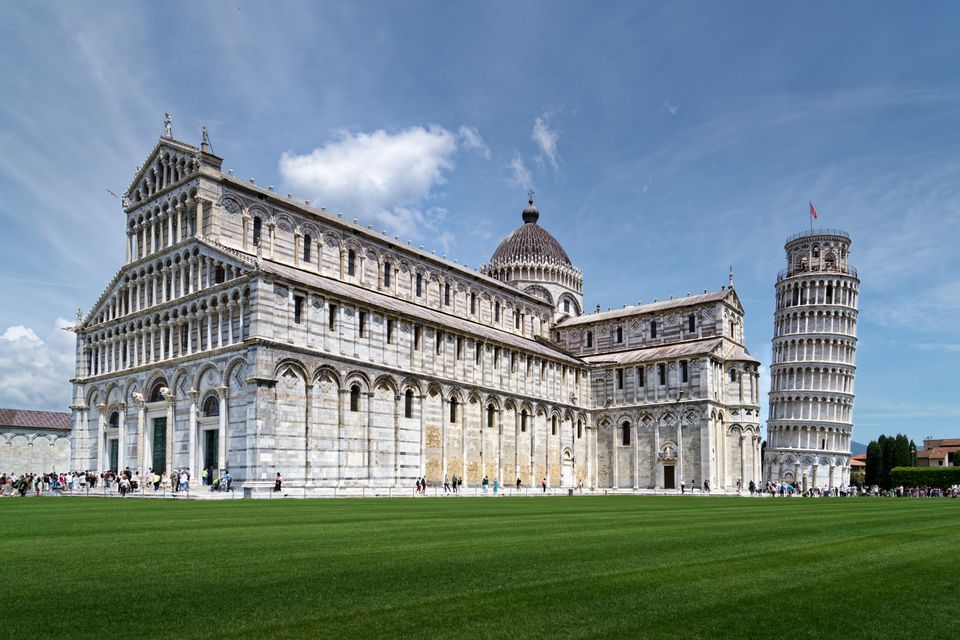
Italy occupies a colorful place in the American imagination. The food, the ruins, the coastline, and the idea that life there is simpler and easier. Some of this reputation holds up under scrutiny. Italy really does have more UNESCO World Heritage sites than any other country on earth. But the facts also reveal the reality of the country, which is in the middle of a transformation that rarely reaches travel brochures. It was the oldest population in the European Union, with fewer babies born in 2025 than at any point since the country unified. Here are seven key facts to help you understand Italy.
7 Italy Facts
1. Italy is the country Americans most want to visit. (Source)
In a survey of 2,551 American adults, Italy topped the travel wish list at 26%. It surpassed Australia, Ireland, the UK, and France. Women chose Italy more often than men, at 28% to men’s 23%.
2. Italy has more UNESCO World Heritage sites than any other nation. (Source)
UNESCO lists 62 inscribed properties in Italy, which is more than China, Germany, and France. The newest addition to the list is Sardinia’s “domus de janas” rock-cut tombs. These were added in 2025 and date back to the fifth millennium BCE.
3. Italy is the world’s biggest producer of wine. (Source)
According to the International Organization of Vine and Wine, Italy’s 2025 wine output was 47.7 million hectolitres, which is up 8% from 2024. Italy has a comfortable lead over France’s 35.9 million hectolitres and Spain’s 29.4 million. Italy’s southern regions drove the bulk of this production increase.
4. Italy has the oldest population in the European Union. (Source)
As of January 2025, 24.7% of Italians were 65 years or older. This is the biggest share of this age demographic in the EU. The average 65-and-up population is 22% of citizens. Italy also has the smallest share of children in the EU, at 11.9% of the population.
5. Birth rates hit a record low in 2025. (Source)
In 2025, Italy recorded about 335,000 births against the country’s 652,000 deaths, a decline of around 300,000 people. The fertility rate fell to 1.14 children per woman. This is the lowest birth figure since the Italian unification in 1861.
6. Sardinia has one of the highest concentrations of centenarians on earth. (Source)
The 1999 AKEA study found 16.6 people aged 100 or over per 100,000 residents in Italy’s central Sardinia region. Compared to 10 per 100,000 across Europe, Sardinia truly stands out for longevity. Another interesting finding is that the male-to-female ratio there is roughly 1:1 as opposed to the typical 1:5.
7. Sicily’s Mount Etna has the longest documented volcano eruption record on Earth. (Source)
The Smithsonian’s Global Volcanism Program traces Etna’s volcanic history to 1500 BCE. No other volcano has a longer written record. It’s Europe’s tallest active volcano, at about 3.350 meters, and has erupted almost continuously since November 2022.
Featured image photo credit: Gil DAIX