
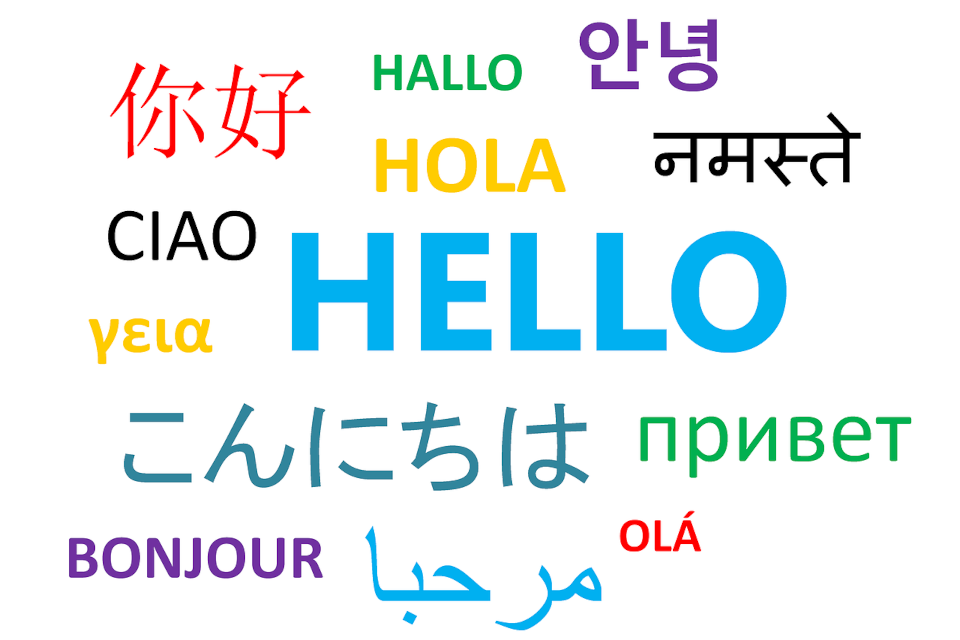
People throughout the world speak more than one language on a daily basis. What may seem uncommon to some Americans is a fact of life for people around the world. Multilingualism is a fascinating topic that encompasses culture, lifestyle, memory, education, and emotion. Learn more about how many people are multilingual, where languages are most plentiful, how people feel about their native language, and how learning a language can shape our memory and intelligence with these captivating facts about our multilingual world.
9 Multilingualism Facts
1. There are 7,000 languages spoken or written in use around the world. (Source)
UNESCO reports that, despite the huge number of languages, only 351 are used in an educational setting. This means there are children around the world who are forced to learn and study in a language that isn’t their native one.
2. Multilingual brains usually activate the linguistic part of the brain even when not engaged in linguistic tasks. (Source)
Bilingual brains also show a greater level of activation after auditory stimuli. This gives bilingual speakers a greater ability for sensory processing. Even the structure of the brain looks different in multilingual speakers.
3. Bilingualism keeps people mentally fit. (Source)
A study of stroke survivors in India showed that cognitive recovery was twice as likely in bilingual people compared to monolingual people. It turns out that practicing another language can keep us mentally fit, just as exercise improves physical fitness.
4. 66% of people feel most themselves when using their native language. (Source)
This goes hand in hand with findings that show people feel comforted by their native language and a sense of cultural identity tied to it. Even so, surveys show that only half of multilingual people think or speak to themselves in their native language.
5. 43% of the world’s population is bilingual and only 17% are multilingual. (Source)
Unfortunately, as older generations pass away, some languages disappear with them. About 43% of languages are labelled as endangered.
6. Children who learn multiple languages and hear them at home reach developmental milestones faster. (Source)
A persistent myth insists that young children exposed to more than one language get confused and experience speech delays, but this is the opposite of the truth. Multilingualism can enhance cognitive abilities, like multitasking and problem-solving.
7. Multilingualism can make us more empathetic. (Source)
Multilingualism can help us connect with more people and cultures, offering us a deeper understanding and empathy.
8. There is an International Mother Language Day. (Source)
This day of recognition occurs on February 21. The purpose of the day is to grow awareness of the vital role language plays in development, identity, and education, and to promote linguistic diversity.
9. A diverse range of languages increases a nation’s GDP. (Source)
In Switzerland, most residents speak at least two languages fluently, and it’s been found that multilingualism accounts for 10% of its GDP. Compare this to Great Britain, which lost an estimated 3.5% of its GDP due to its lack of investment in language learning and its insistence on English in the business world.