
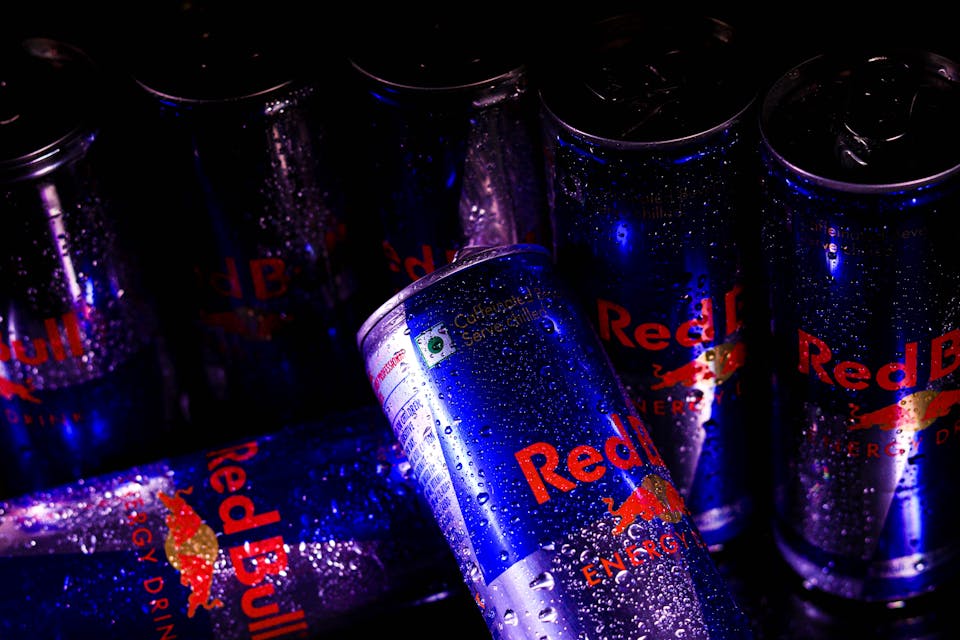
Many people need a caffeine hit to get through the day. Energy drinks are a popular choice for people who want a sugary sweet drink they can pop open and drink on the go. Energy drinks are often marketed toward athletes, video gamers, and teenagers. There is plenty of discourse over the health benefits and risks of energy drinks. Let’s explore the truth with ten facts that give us a well-rounded look at energy drinks from their chemistry to their marketing.
8 Energy Drink Facts
1. Energy drinks led to over 20,000 emergency room visits in 2007. (Source)
As the market for energy drinks grew, people weren’t aware of the dangers of mixing energy drinks with other substances. Over 42% of these emergency room visits arose from mixing energy drinks with alcohol or drugs like Adderall and Ritalin. Combined, there are way too many stimulants that can dangerously raise a heart rate.
2. On average, typical energy drinks contain about 80 mg of caffeine. (Source)
Caffeine is the main ingredient in energy drinks. This is about half the amount of caffeine you’d find in the same amount of coffee. Every energy drink label will inform consumers exactly how much caffeine the drink contains, so it’s easy to monitor caffeine consumption.
3. Red Bull began the demand for energy drinks. (Source)
Red Bull drinks debuted in 1987. Their marketing aligned the drink with extreme sports. Skateboarders, BMX bikers, and other athletes promoted the beverage. This turned out to be a powerful campaign, one that many other energy drink brands try to mimic.
4. Energy drinks aren’t for children, but their marketing appeals to them. (Source)
Researchers caution parents against allowing their children to consume energy drinks. It’s not clear what effects these caffeine levels have on children. Research links children’s consumption of energy drinks to sleep disturbances, diarrhea, jitters, agitation, and arrhythmias.
5. Some studies show that energy drinks can improve physical endurance. (Source)
Energy drinks can enhance alertness and improve reaction time, which is helpful to physical endurance, but an excess of caffeine can cause shaky hands and cancel out those positive benefits.
6. Energy drinks can disturb normal heart functions. (Source)
Energy drinks can elevate blood pressure and induce abnormal heart electrical activity. People who already have chronic heart issues should avoid energy drinks.
7. The sugar content in energy drinks may be more harmful than the caffeine. (Source)
Some energy drink brands load them with sugar. So much sugar that you’d have to walk three hours to burn off the calories. Even diet drinks aren’t safe, as research suggests that diet drinks can cause hunger.
8. Many energy drinks contain taurine. (Source)
Taurine is an amino acid with many functions, but what about its role in energy drinks? It’s a mystery. Taurine is very common in energy drinks, along with herbs like ginseng and ginkgo biloba. Other random ingredients in energy drinks include niacin, carbohydrates, guarana, kava, and green tea extract.
Featured image photo credit: Sanket Sawale